Repair, reline or replace: decide on the evidence.
The Canadian guide to sewer line replacement, method by method: what the camera footage justifies, which technique fits your pipe and yard, what goes back in the ground, and how the job should run.
Sewer line replacement renews the pipe between a house and the municipal main along its whole length, by open-cut excavation, pipe bursting or full-length cured-in-place relining. SewerReplacement.ca helps Canadians decide whether a line needs repair, relining or replacement, choose the method that fits the defect and the site, and supervise the work. It is an independent information network, not a contractor.
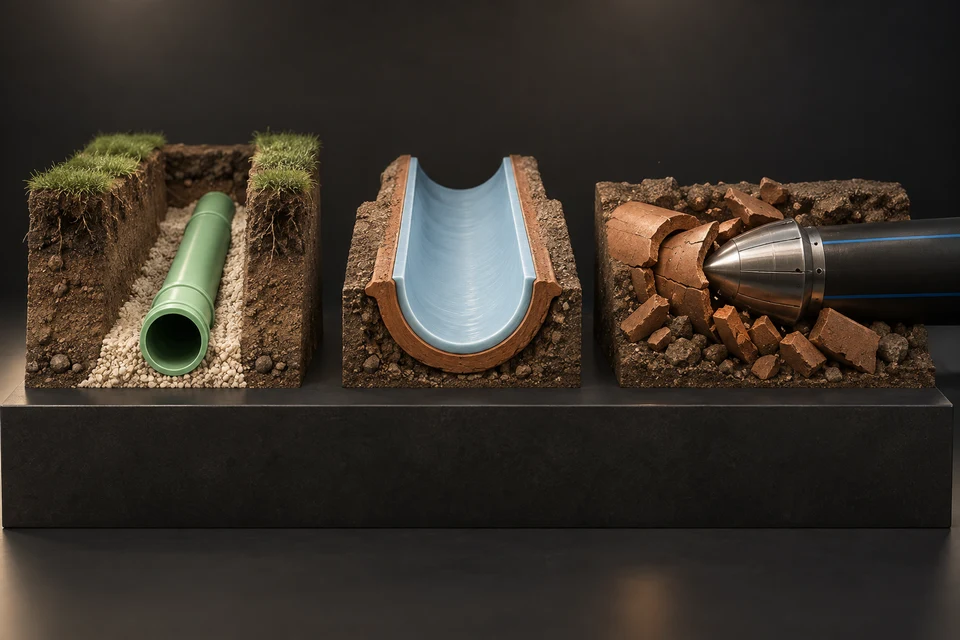
Replace the same sewer line three different ways
One house, one yard, one 15 m lateral to the City main. Set the pipe's condition, what sits on top of it, the depth and the bends, then play open cut, bursting or lining, or run all three back to back and compare what each leaves behind.
What the model shows, in words
Open cut digs the whole run
The trench opens from the foundation to the property line, the soil piles up beside it and the old pipe comes out. New PVC goes down on a checked slope, the trench is refilled in compacted layers, and whatever was on top has to be rebuilt: sod, planting beds or a slab of driveway. It is the one method here that can take a belly out of the line.
Bursting needs only two holes
A pit goes in near the house and another near the property line. A cone pulled between them breaks the old pipe into the soil while fused HDPE follows it. The yard between the pits is left alone, but the new pipe traces the old path, so a sag comes along, and a head cannot steer round two or more bends.
Lining builds a pipe inside the old one
After cleaning and a camera pass, a resin-soaked tube is turned inside out through the cleanout, pressed against the old wall and cured hard. Nothing on the surface is opened. The old pipe stays as the host, so the liner copies its shape, cannot get past a collapse, and trims a little off a bore that may already be tight.
The ratings are the method selector's
The badges in the panel apply the Replacement Method Selector to your settings, assuming one access point and no connections along the line. A driveway or a deep line drops open cut to possible because of the extra digging and restoration; a shallow line does the same to bursting because of heave.
What the picture does not show
The model leaves out prices, soil tests, utilities and permits, and its depths and pit sizes are drawn to explain rather than measured. For whether the pipe needs replacing at all, the Repair or Replace? Decision Engine reads your camera findings; the chosen contractor's survey settles the method.
Where is your replacement decision stuck?
Pick the closest match. Each path goes to the guide that answers it in full.
Repair or Replace? Decision Engine
The Repair or Replace? Decision Engine turns camera findings into a verdict: replace, replace the sagging section, spot repair, descale then reline, reline, maintain, or get a second opinion when nothing fits. It weighs material, age, camera findings, extent, recent backups and your plans, applies seven rules in order with the first match winning, and explains its reasons and what to ask a contractor.
How the Repair or Replace? Decision Engine works →
Also freeReplacement Method Selector
Rate CIPP lining, pipe bursting, open cut and spot repair for your sewer line by depth, surface, condition, access, bends and connections, with the reasons.
Repair or Replace? Decision Engine
Read these first
Repair or Replace? Decision Engine
Enter your camera findings, material, age and backup history and get a verdict with its reasons and the question to put to a contractor.
CornerstoneSewer replacement methods compared
Open cut, CIPP relining, pipe bursting, sectional liners, spot repairs and guided boring, by what each can and cannot fix.
CornerstoneBest pipe for sewer replacement
PVC SDR 35 and SDR 28, HDPE and ABS explained, with the bedding, bends, cleanouts and tracer wire that make them last.
CornerstoneSewer replacement, day by day
From locates and excavation to laying pipe on grade, inspection, backfill and restoration, including trenchless days and winter work.
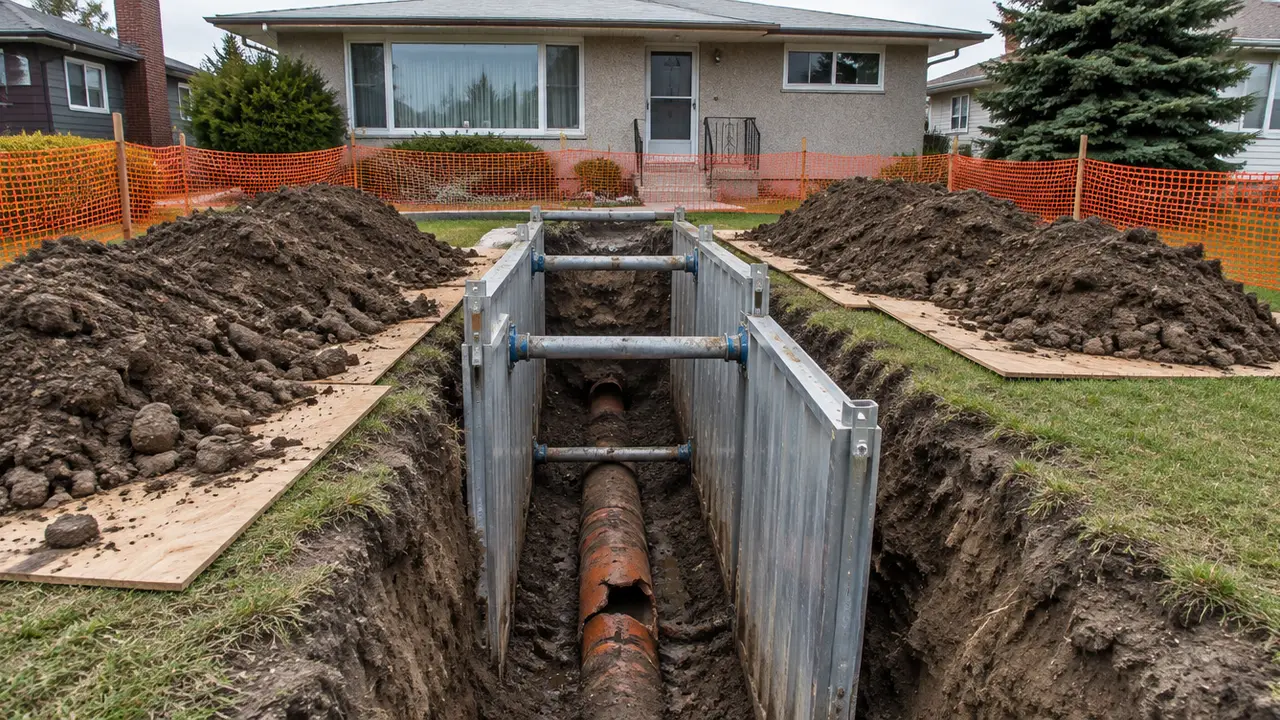
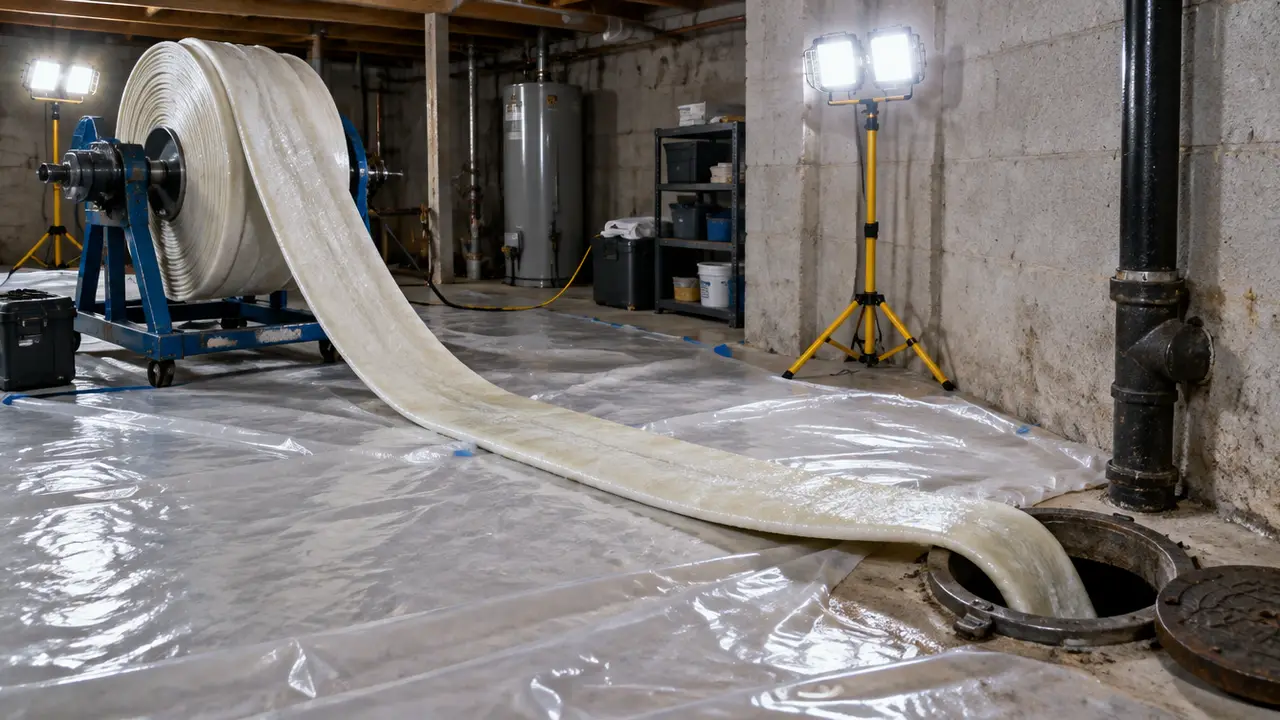
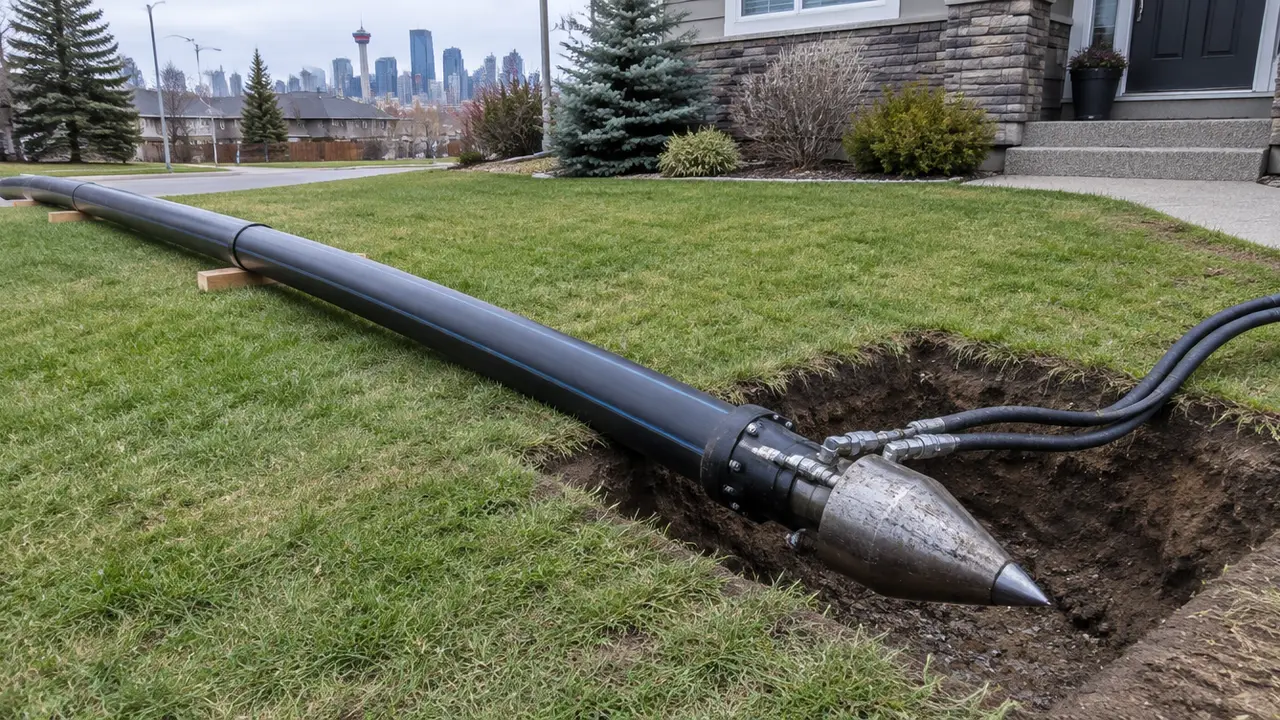
What it looks like down there
Illustrations of what this work involves and what a camera or a trained eye picks up. Every guide on SewerReplacement.ca carries more like these.
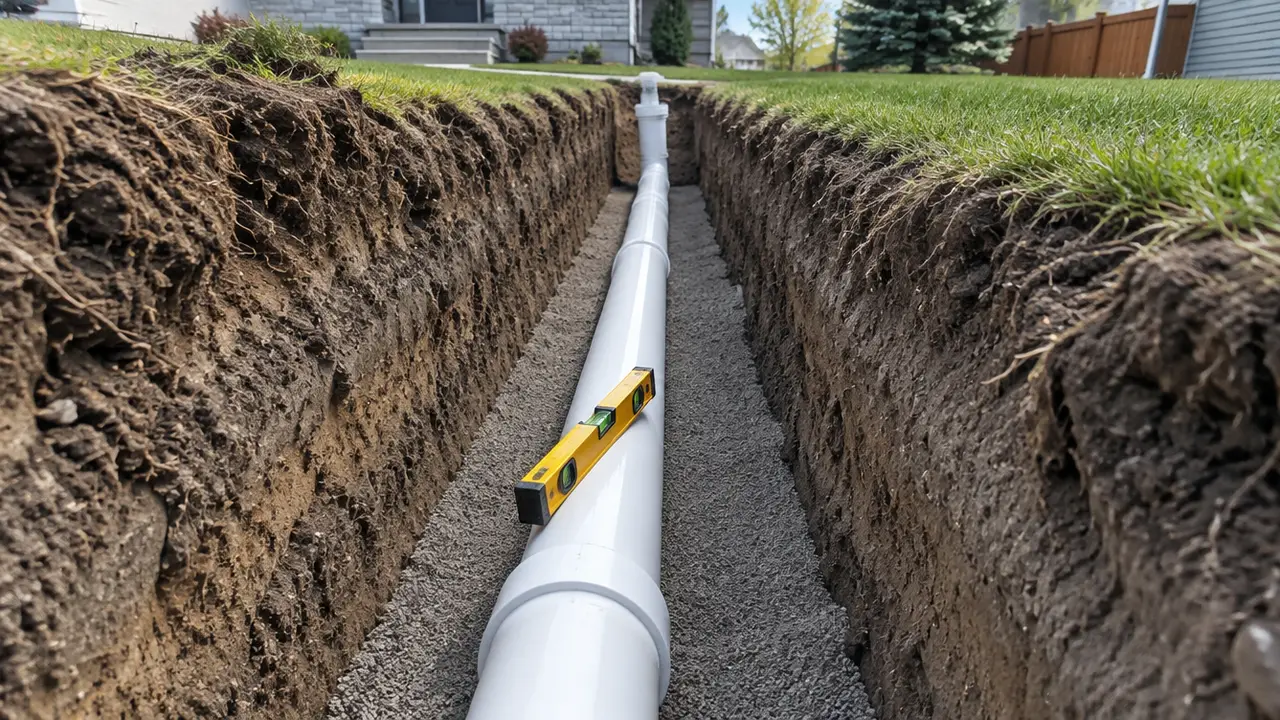
01 /How do you decide between repair, relining and replacement?
The decision rests on recorded camera footage, read against three questions: how much of the line is damaged, whether the damage is structural, and whether the old pipe can still host a liner. A single offset joint in sound pipe is a spot repair. Cracked, root-invaded clay that is still round and on grade is a relining candidate. A collapse, deformed fibre pipe or a belly that holds water needs digging or bursting, because a liner copies whatever shape and slope it is cured against.
| Verdict | Typical evidence | What happens next |
|---|---|---|
| Maintain | No structural defects, or roots at a few joints with few backups | Clean as needed and camera every one to two years |
| Spot repair | One defect in otherwise sound pipe | A small dig or a sectional liner at that spot |
| Reline | Cracks, open joints or roots along a round pipe on grade | A full-length cured-in-place liner |
| Replace the sagging section | A belly holding water | Excavate and re-lay the low section; reline or keep the rest |
| Replace | Collapse, fibre pipe, deformation or damage throughout | Open cut or pipe bursting |
Two circumstances change how a verdict should be read. If you plan to sell within a couple of years, document the line's condition and get written quotes now, because a buyer's inspector is likely to scope it. If the line is 70 years old or more, its remaining life is limited even where the video looks acceptable, so ask for a full-length price alongside any repair. Neither changes what the pipe needs today; both change what you should have in hand before you decide.
The Repair or Replace? Decision Engine applies these rules in order to your own findings. The thresholds behind them are explained in when to replace a sewer line and spot repair vs full replacement.
02 /Which replacement method fits which problem?
Every method has a defect it cannot handle, and knowing that list protects you from a proposal that suits the contractor's equipment better than your pipe. Open cut can fix anything, including lost grade, but its cost rises steeply under driveways, slabs and roads. Relining avoids digging but needs a round, continuous host. Bursting can replace broken or undersized pipe and even upsize it, but it follows the old path and dislikes bends.
The Replacement Method Selector rates lining, bursting, open cut and spot repair for your depth, surface, condition, access, bends and connections. For the engineering behind each one, read CIPP lining explained, pipe bursting explained and how trenchless sewer replacement works. If the camera shows a sag, can trenchless fix a belly explains why excavation is the only real fix.
03 /What goes back in the ground, and how long does it last?
For an open-cut house lateral in Canada, the usual replacement is gasketed PVC sewer pipe, SDR 35 or the thicker SDR 28, laid on compacted granular bedding at a checked slope. Burst replacements use fused HDPE. Building drains under the basement floor are usually ABS or PVC drain-waste-vent pipe. Design lives for modern plastic pipe and structural liners are measured in decades, but installation, not the label, decides how long a particular line lasts.
The details matter as much as the pipe: long sweeps instead of tight bends so future cameras and liners can pass, a cleanout near the foundation, a tracer wire on plastic pipe, shielded transition couplings to old pipe, and backfill compacted in layers. Best pipe for sewer replacement covers the specification, and how long sewer pipes last covers the old materials coming out and the new ones going in. If yours is cast iron, clay or fibre pipe, replacing old sewer pipe by material shows how the material limits the method.
04 /How should a sewer replacement job run?
- Footage and ownership
A recorded camera run with distances and depths, and your municipality's answer on where your responsibility ends. In Calgary, call 311.
- Decision and method
Use the decision engine and method selector, then ask contractors to price the same scope from the same video.
- Permits and locates
A plumbing permit in most municipalities, permission for any boulevard or road work, and public utility locates through the provincial one-call service before any digging.
- The work
Usually one to three days on site for open cut, about a day for relining and one to two for bursting, with a no-water window while the line is open.
- Inspection, video and warranty
An inspection before backfill where required, a finished-line video, and written workmanship and material warranties tied to that video.
See sewer replacement day by day, how to choose a sewer replacement contractor and sewer replacement warranties and final checks. The pipe that comes out, or stays in, is covered in what happens to the old sewer pipe. Approvals are explained in permits and inspections, finished yards in driveways and trees, and claims in does insurance cover sewer line replacement. Condominiums, shared laterals and rentals have their own guide, as do lines running to a septic tank.
05 /Where does SewerReplacement.ca fit in the HAUSE Sewer network?
SewerReplacement.ca owns the decision and the engineering: repair versus relining versus replacement, method selection, pipe materials, the replacement process and contractor selection. For money questions, including detailed pricing by method, quote comparison and financing, go to SewerQuotes.com; our own repair vs reline vs replace cost page summarises the decision math. For understanding the camera inspection that every decision rests on, go to SewerInspector.ca. For root problems, SewerRoots.ca.
In Calgary, the Calgary page connects City service line data to replacement methods, and the Calgary portals go further: CalgarySewers.ca for the City's data and ownership, and CalgarySewerReplacement.ca for the local replacement process. HAUSE Sewer is an independent information and quote-request network and does not perform sewer work. When you have footage and a scope, request quotes.
Every guide on SewerReplacement.ca
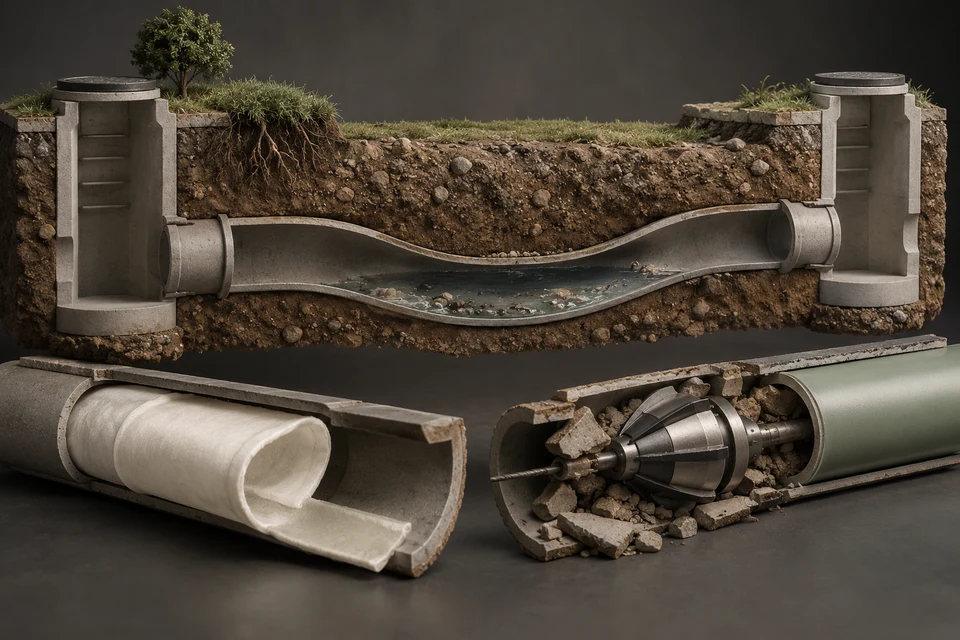
Can trenchless fix a belly in a sewer line? What sags need instead
Can trenchless sewer repair fix a belly? Why lining and bursting follow the old grade, how to judge a sag on camera, and how the sagging section is re-laid.

Does home insurance cover sewer line replacement?
Does home insurance cover sewer line replacement in Canada? What backup and service line coverage pay for, why cause matters, and how to sequence a claim.
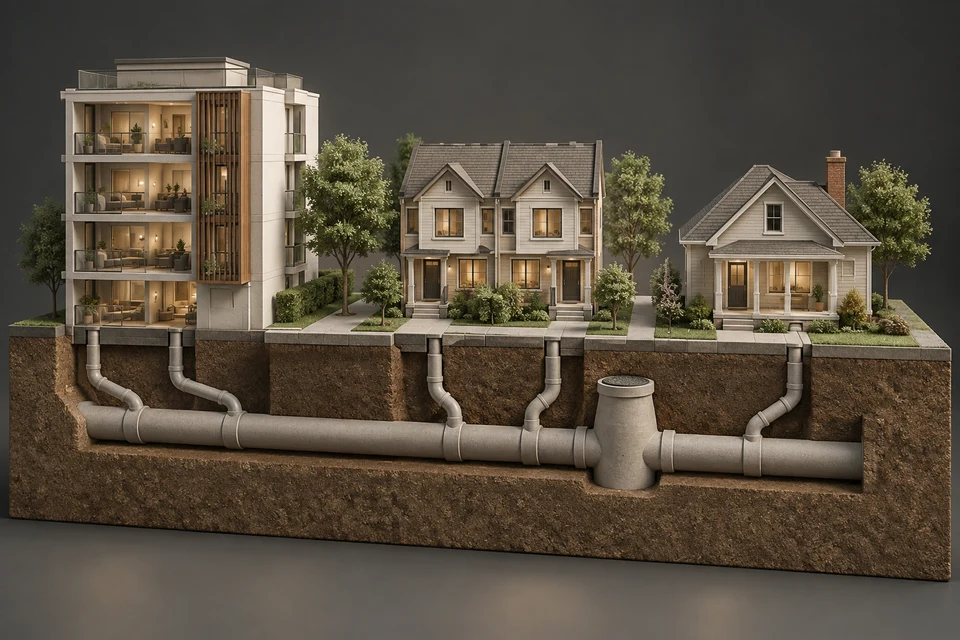
Sewer line replacement when more than one owner is involved: condos, shared laterals and rentals
Who decides and who is responsible for sewer line replacement in condos, stratas, shared laterals and rental homes in Canada, and how the work is planned.
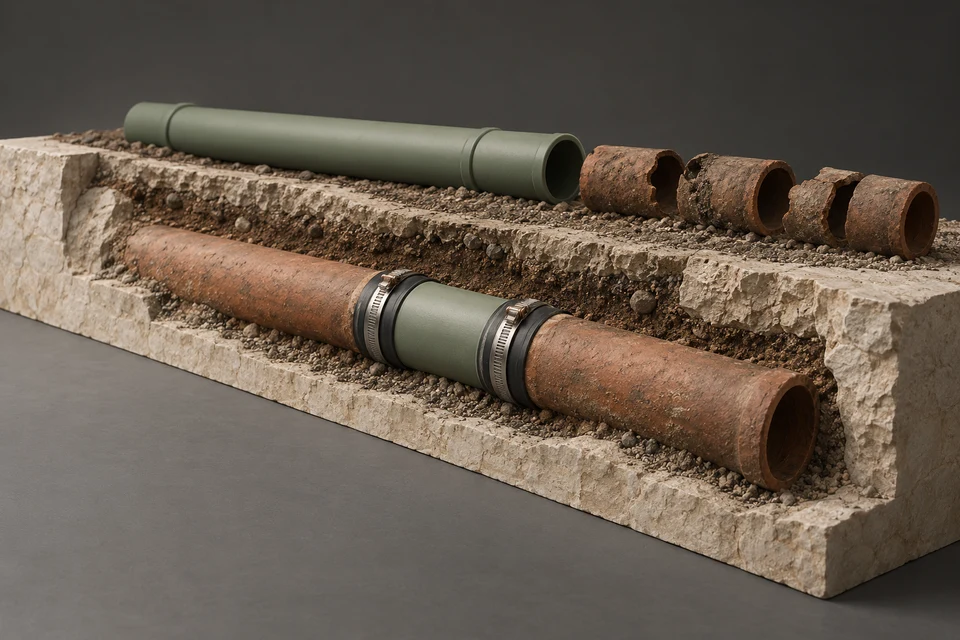
Spot repair vs full sewer replacement: where the line is drawn
Spot repair vs full sewer line replacement: when one dig or a sectional liner is enough, how repairs are joined, and what repair sleeves can and cannot do.
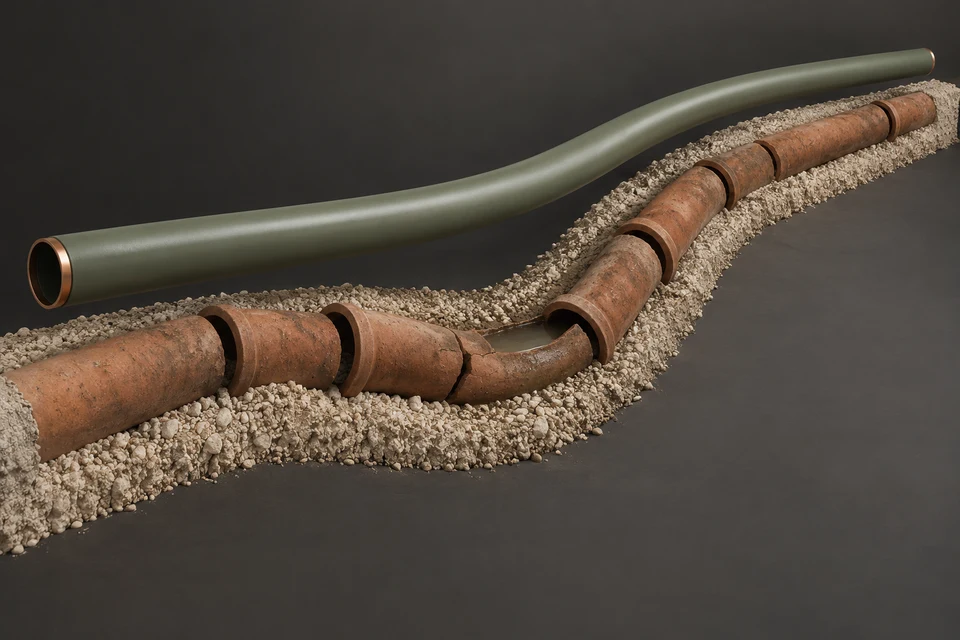
When to replace a sewer line, and when repair is still the better call
When to replace a sewer line: the camera findings, pipe materials, backup history and planning triggers that justify replacement over repair or relining.

How to choose, and supervise, a sewer replacement contractor
How to choose a sewer line replacement company: match the contractor to the method, verify credentials, test the recommendation and supervise the job.

Sewer replacement warranties, and the final checks before you pay
Sewer replacement warranties explained: workmanship vs material vs liner cover, common exclusions, transfer to buyers and the closeout file to keep.
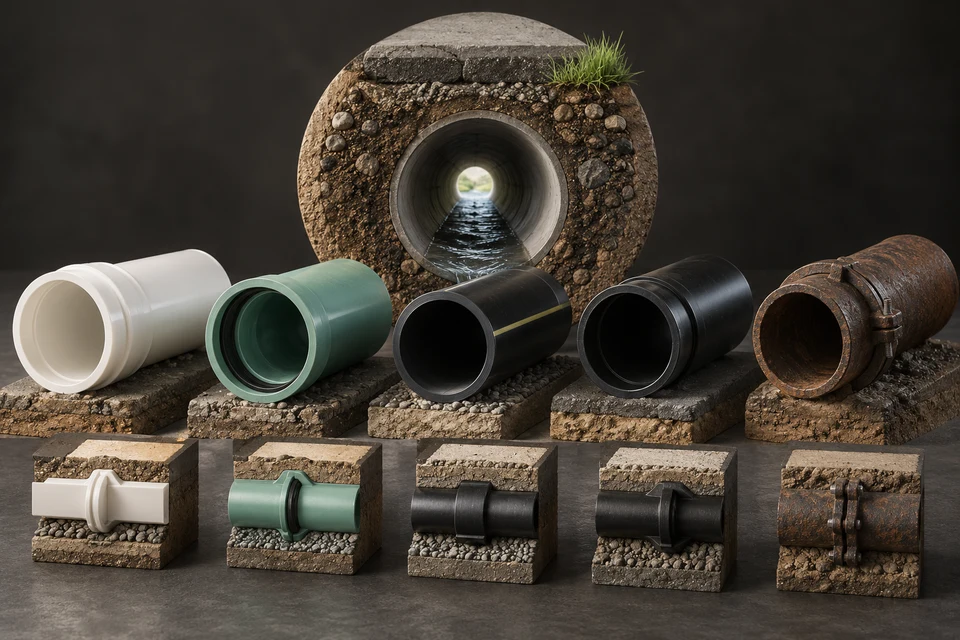
The best pipe for a sewer line replacement, and what the labels mean
The best sewer pipe for a replacement: PVC SDR 35 and SDR 28, HDPE, ABS and cast iron compared by joints, stiffness, install method and Canadian standards.
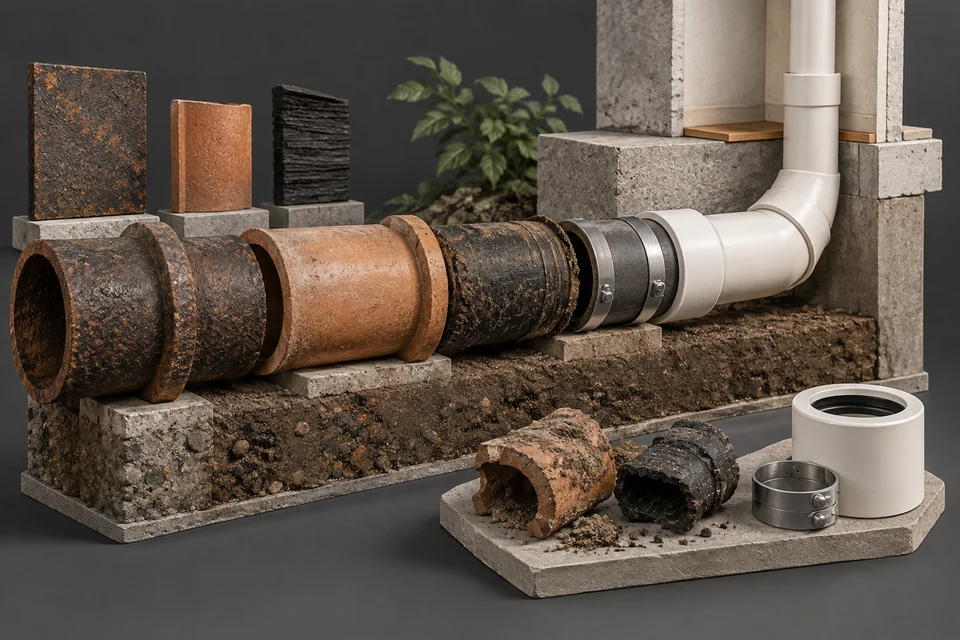
Replacing cast iron, clay and Orangeburg sewer pipe in older homes
Replacing cast iron, clay or Orangeburg sewer pipe: which methods suit each old material, how new PVC joins old pipe, and how to plan a mixed older line.
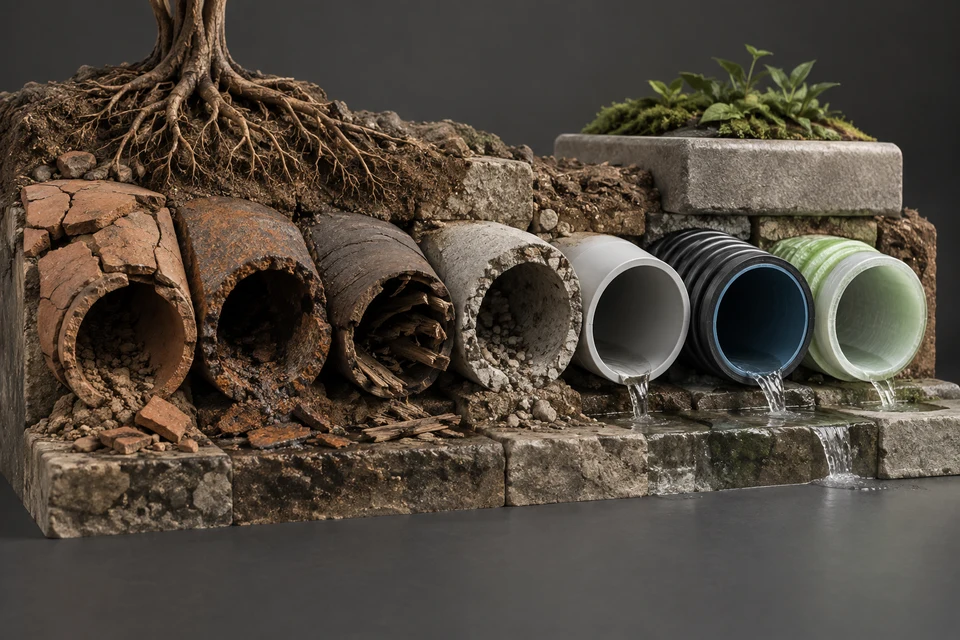
How long sewer pipes last, from clay and cast iron to PVC and liners
How long sewer pipes last: clay, cast iron, Orangeburg, concrete, PVC, HDPE and CIPP liners, what shortens a sewer line life and how to judge yours.
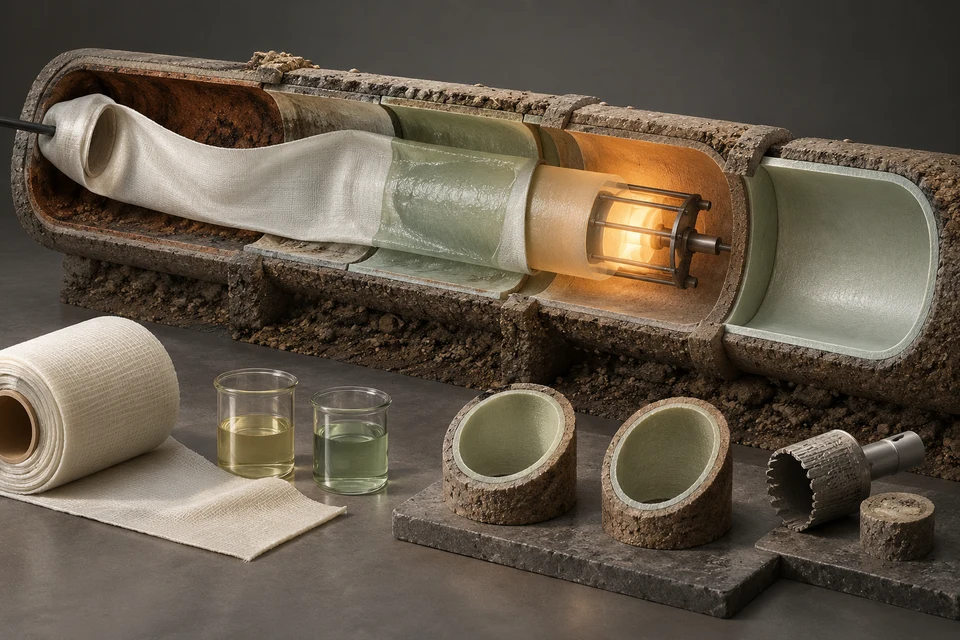
CIPP sewer lining explained: how a fabric tube becomes a structural pipe
CIPP sewer lining explained: liner fabrics, epoxy and polyester resins, curing methods, wall thickness, lost bore, reinstatements and final checks.
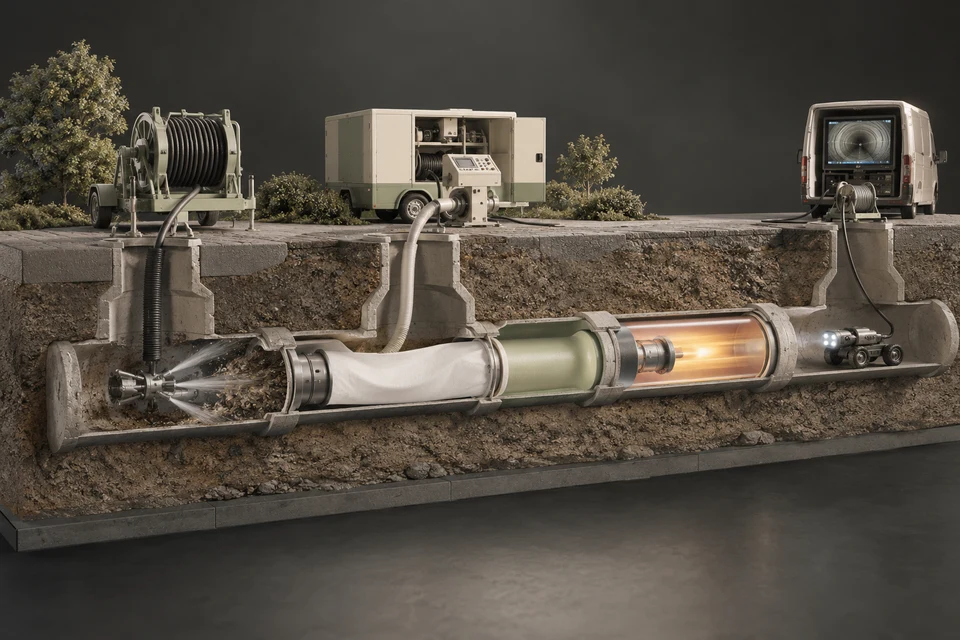
How trenchless sewer replacement works, from camera to final video
How trenchless sewer replacement works: access, cleaning, lining or bursting, curing, reinstating connections and the final video, plus the equipment used.
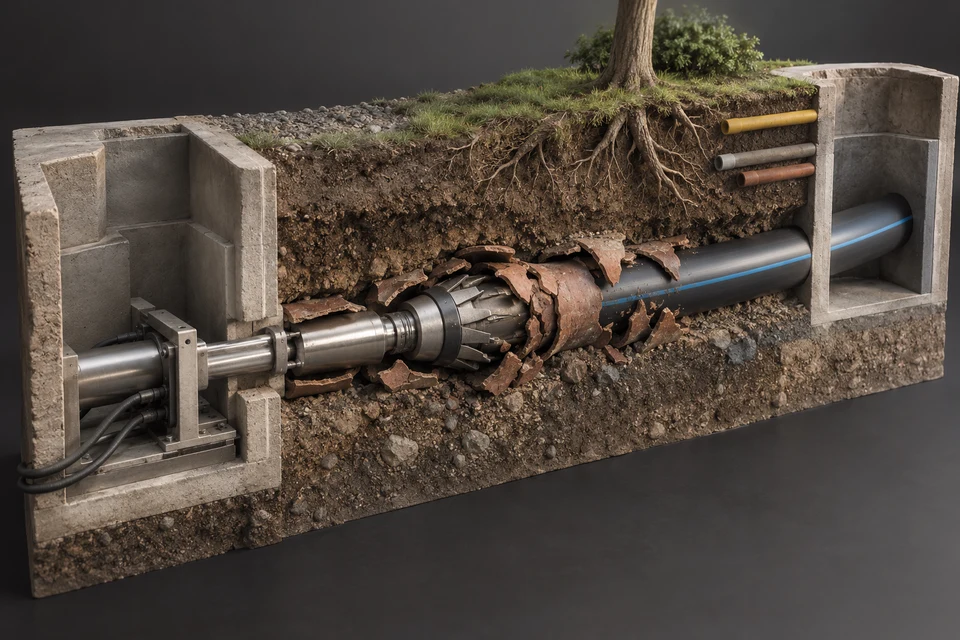
Pipe bursting explained: breaking the old sewer and pulling a new one through
Pipe bursting sewer line replacement explained: static vs pneumatic, HDPE pipe, upsizing, pits, heave, nearby utilities and where it cannot work.
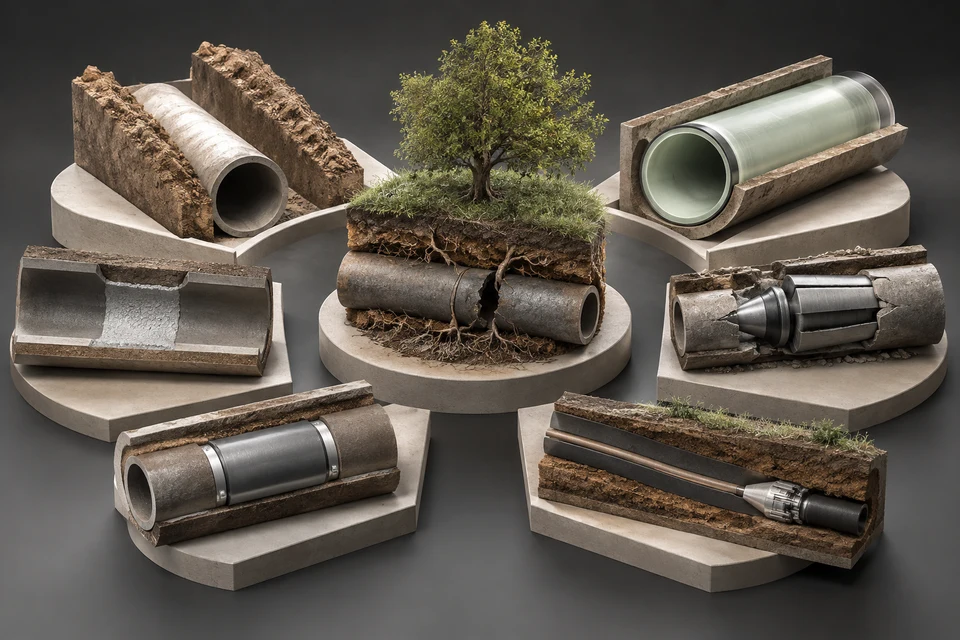
Sewer line replacement methods, compared by what each can and cannot fix
Sewer line replacement methods compared: open cut, CIPP relining, pipe bursting, sectional liners, spot repair and guided boring, and what each fixes.
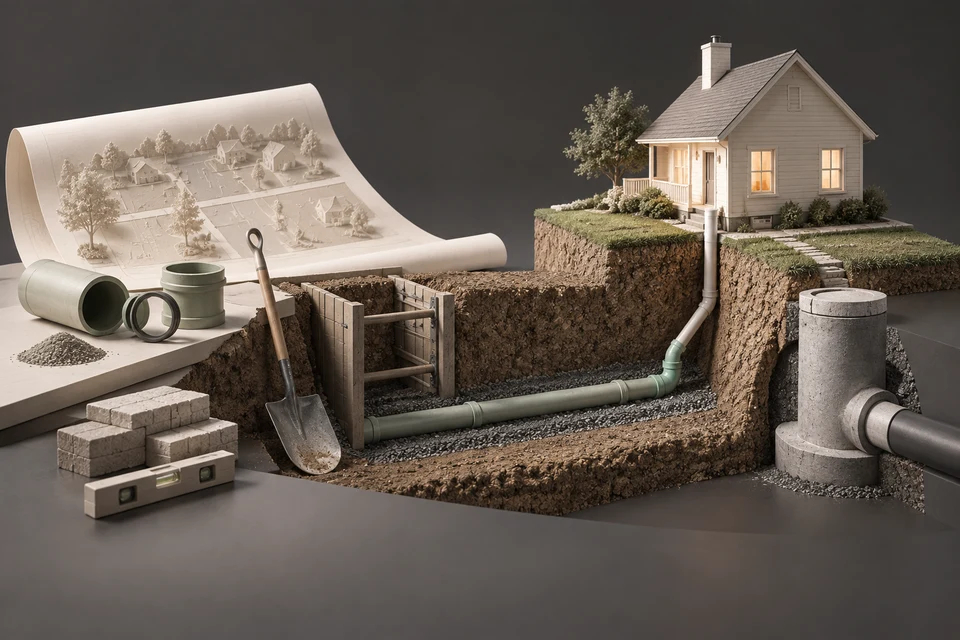
Can you replace your own sewer line? What the law, the trench and the grade demand
Can you replace your own sewer line in Canada? Homeowner permits, the municipal connection, trench safety, setting grade and the parts a DIYer can do.
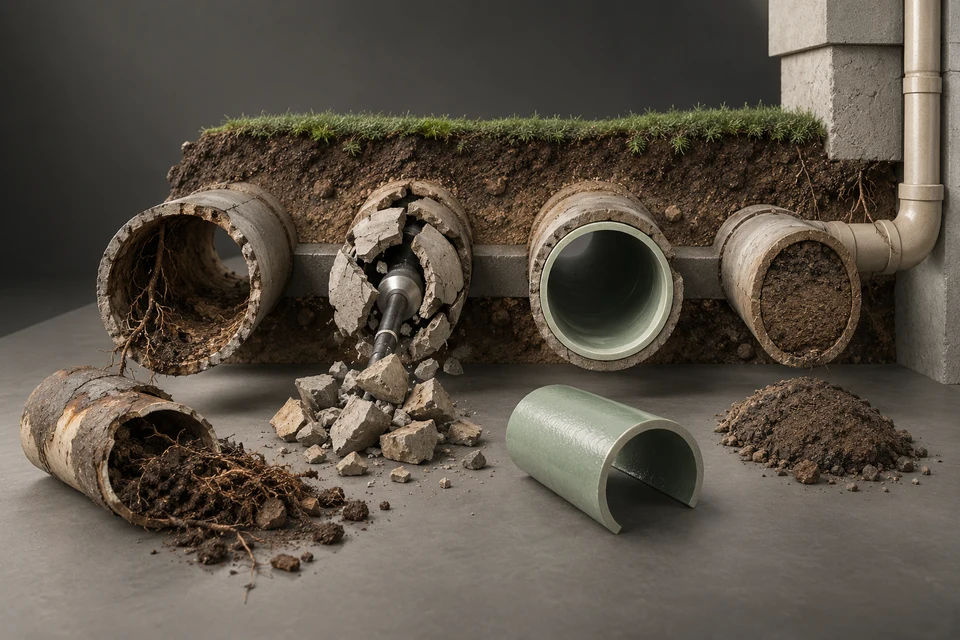
What happens to the old sewer pipe after a replacement
What happens to the old sewer line after replacement: removal and disposal, bursting fragments, host pipe under a liner, and abandoning an old lateral.
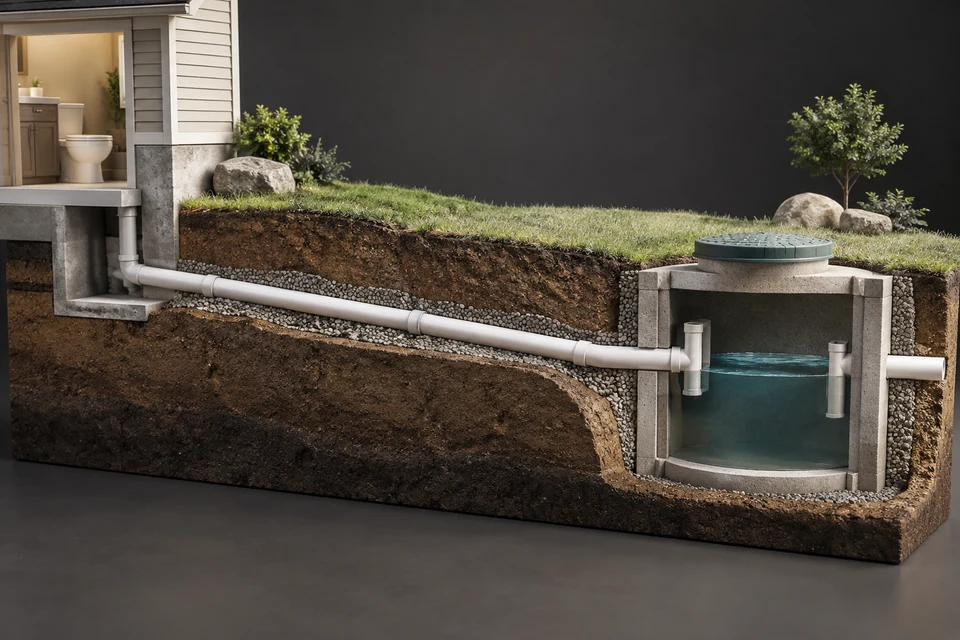
Replacing the sewer line from the house to the septic tank
How to replace the sewer line from a house to a septic tank: telling pipe from tank problems, permits, slope, the tank inlet, settlement and what to protect.
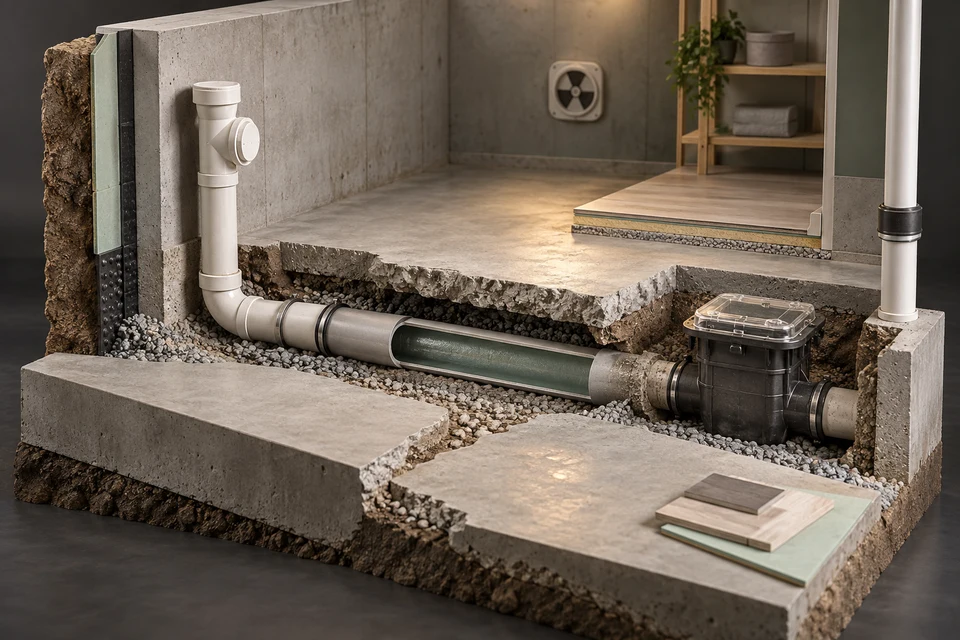
Replacing a sewer line under the basement floor or slab
How to replace a sewer line under a basement slab: trenching the floor, lining from a cleanout, backwater valves, testing, radon and restoration.
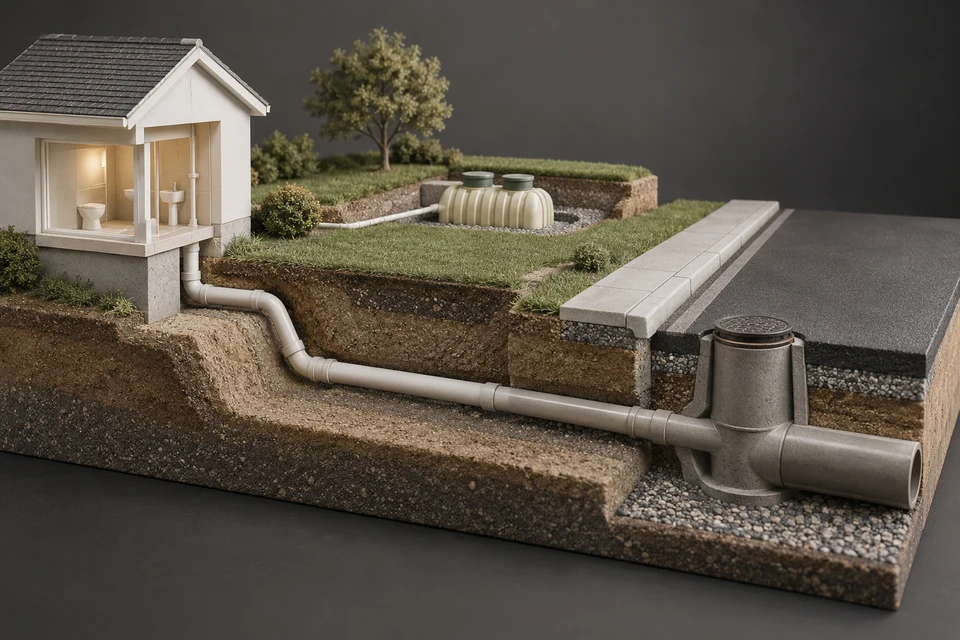
Sewer lateral replacement from the house to the street
Sewer lateral replacement from house to street: who owns each part, the connection to the main, road-side permits, timelines and the septic variant.
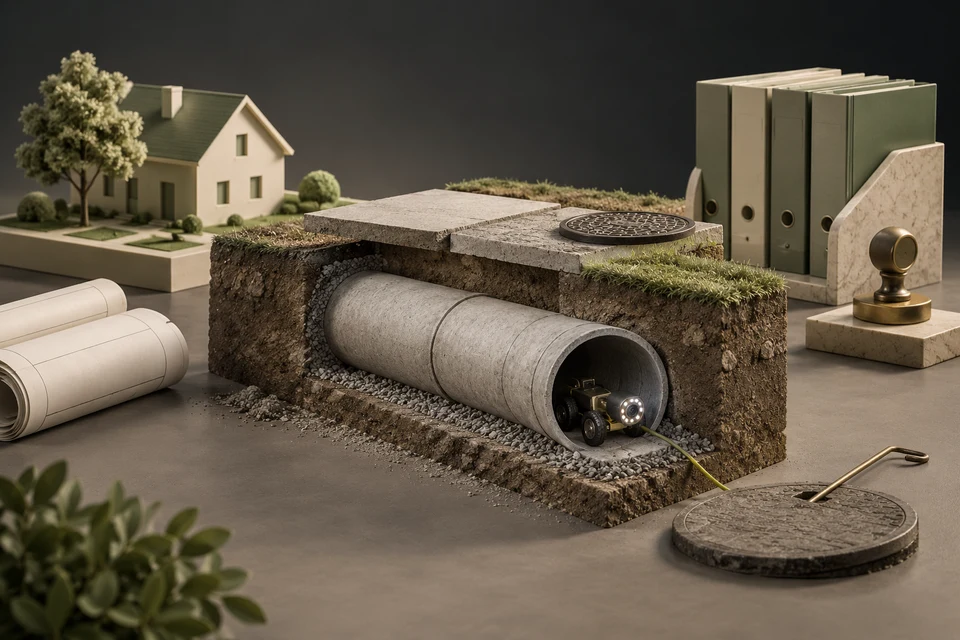
Sewer line replacement permits and inspections: how approval works in Canada
Sewer line replacement permits in Canada: which approvals a job needs, who applies, what the inspector checks before backfill, and the records to keep.
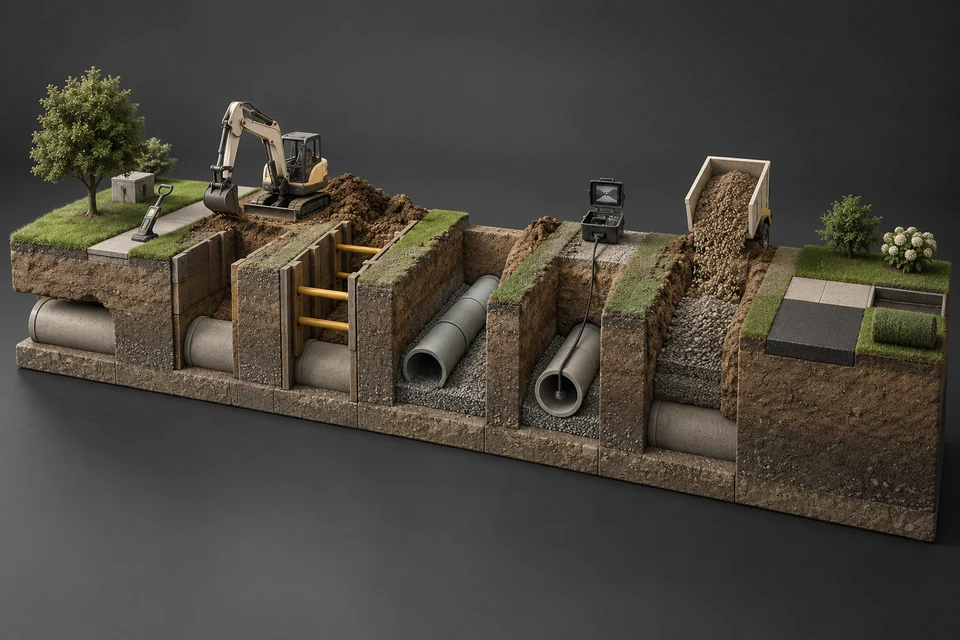
What happens during a sewer line replacement, day by day
How long sewer line replacement takes, day by day: locates, excavation, shoring, laying pipe to grade, inspection, backfill, restoration and trenchless days.
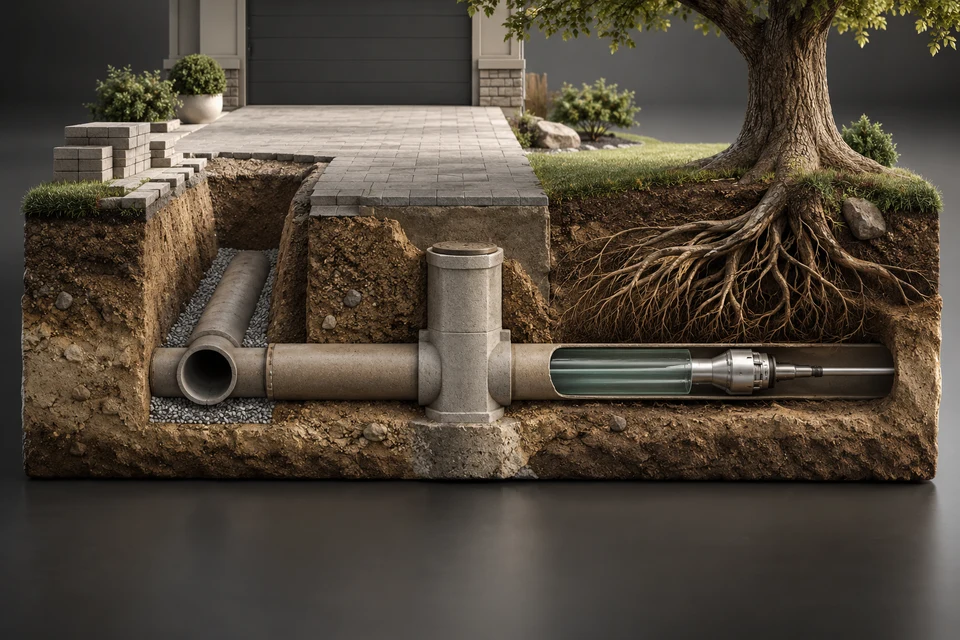
Replacing a sewer line under a driveway, near trees or through a finished yard
Replacing a sewer line under a driveway or near trees: trenchless and open-cut options, protecting roots, restoring the surface and what the quote should say.
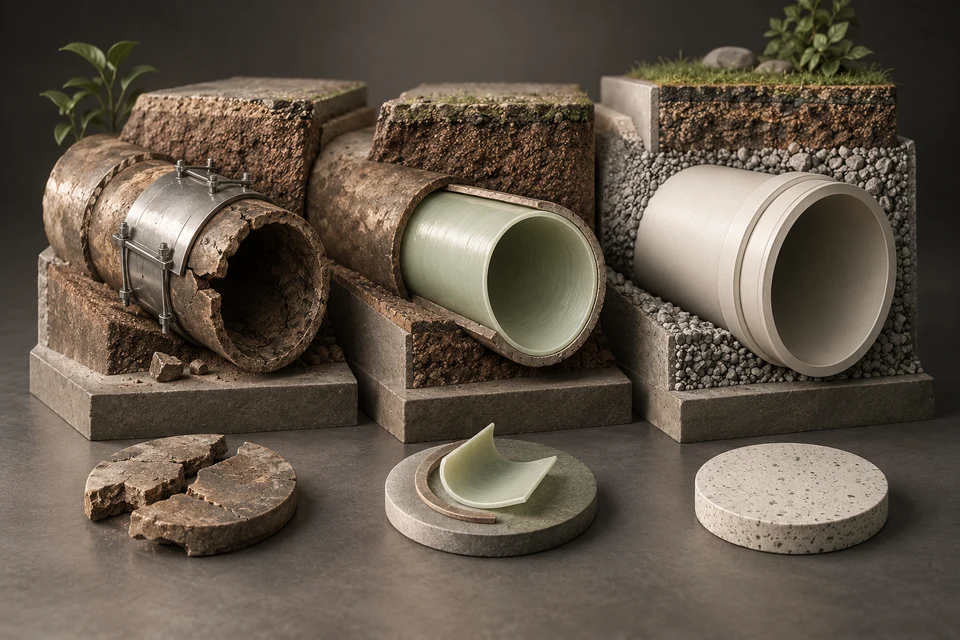
Repair vs reline vs replace: what each option costs, and what it buys
Repair vs reline vs replace sewer line cost in Canada, 2026: planning ranges by method, why replacement is expensive, the cheapest route and break-even math.
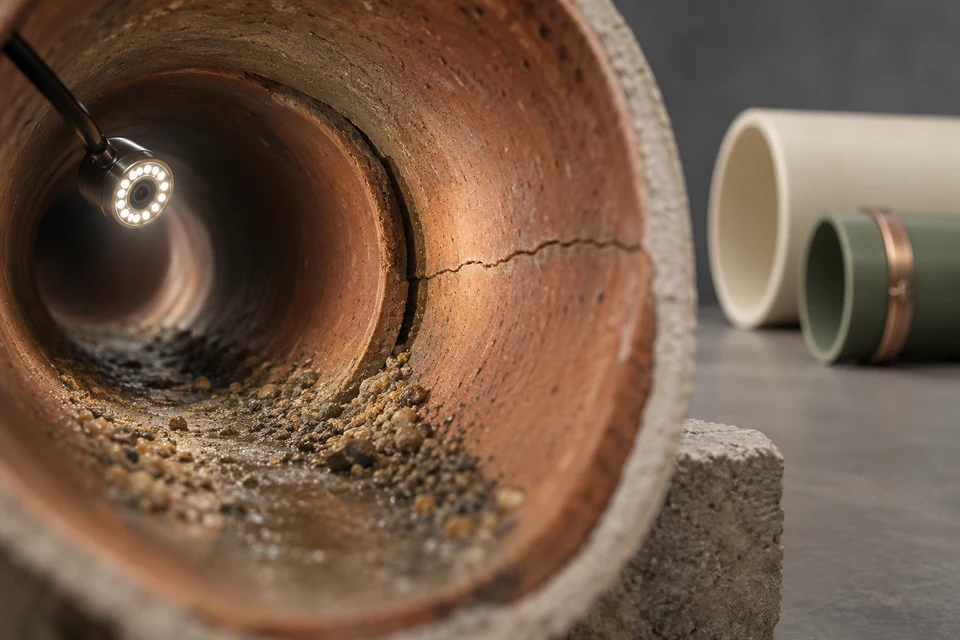
Repair or replace? A decision engine for your sewer camera findings
Enter your sewer pipe material, age, camera findings, extent and backups to get a repair, reline, replace or maintain verdict with reasons and questions.
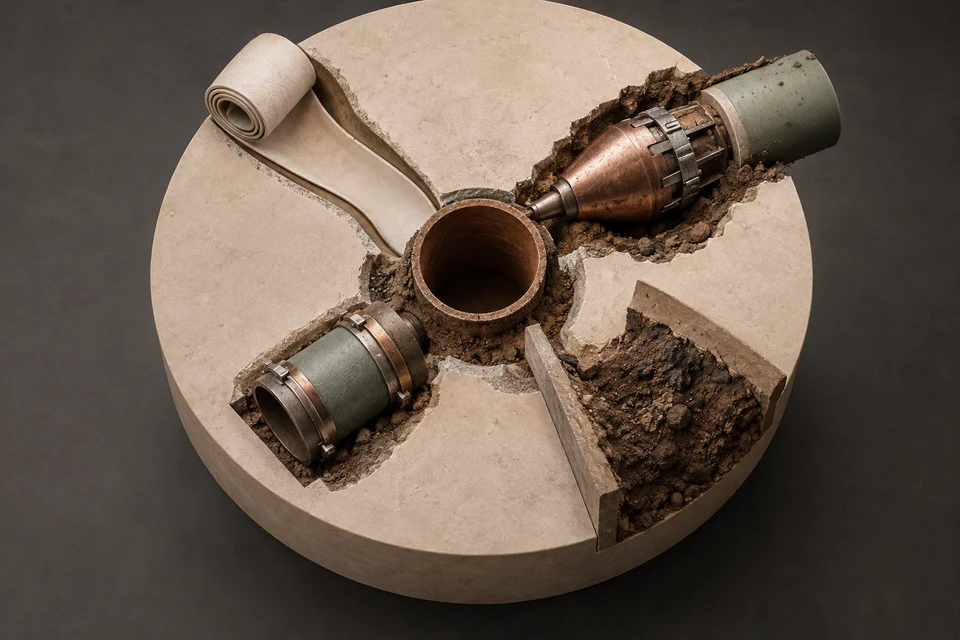
Replacement Method Selector: which method fits your sewer line?
Rate CIPP lining, pipe bursting, open cut and spot repair for your sewer line by depth, surface, condition, access, bends and connections, with the reasons.
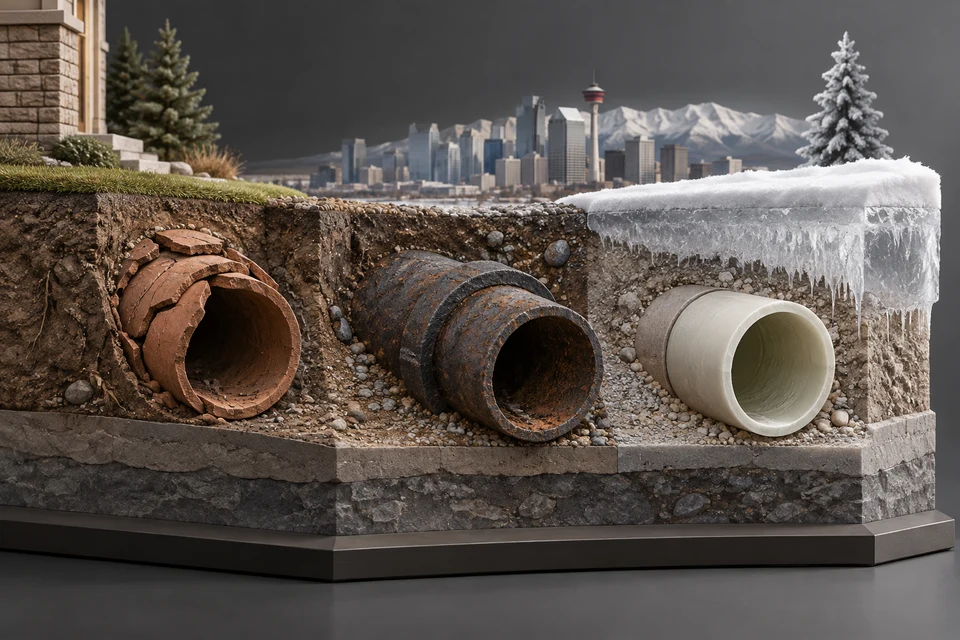
Sewer line replacement in Calgary: matching the method to Calgary pipe
Sewer line replacement in Calgary: what City service line data shows by era, which methods suit clay tile and cast iron, Calgary soils, depth and winter.
Frequently asked
Is SewerReplacement.ca a sewer contractor?
No. It belongs to HAUSE Sewer, a network that publishes independent information and passes quote requests to contractors. It explains replacement decisions and methods and can pass your request to contractors, but it does not perform work.
How do I know whether to repair or replace my sewer line?
Get a recorded camera inspection. One defect in sound pipe usually means a spot repair; damage along a round pipe on grade suggests relining; collapse, deformed or fibre pipe, sags or damage throughout point to replacement.
What is the best way to replace a sewer line?
The one that fixes your defect with the least expensive disturbance. Open cut suits sags and shallow lawns; relining suits round pipe under driveways or trees; bursting suits broken or undersized pipe on a straight path.
Can a sewer line be replaced without digging?
Mostly. Relining can often be done through cleanouts, and bursting needs pits only at each end and at connections. A sag or collapse still needs excavation at that spot.
How long will my sewer be out of service during replacement?
Once permits and locates are in place, typically one to three days on site for open cut, about a day for relining and one to two days for bursting, with restoration afterward.
Who pays for sewer line replacement?
Usually the owner pays for the private side and the municipality for its portion, but boundaries vary by city. Confirm with your municipality before getting quotes; in Calgary, call 311.
Where can I find sewer replacement costs?
Our repair vs reline vs replace cost page summarises 2026 planning ranges, and SewerQuotes.com covers pricing by method, quote comparison and financing in detail.
Describe the problem once. Get a straight answer.
Send the symptoms and anything you already know — age of the house, what a camera found, what you have been quoted. The HAUSE Sewer desk replies with next steps and, where available, a local contractor for the job.
Sewage backing up right now? Stop using water, keep people away from the water, and do not touch electrical equipment near it.